Tuesday, January 11, 2005


Scoggins Wash in Zion National Park is a nice winter hike that is located on the far southside of the park where it is warmer. The hike heads toward the Altar of Sacrafice and it has some fun bouldering. The water souce is not reliable however.

Monday, January 10, 2005

Scoggins Wash - Zion National Park

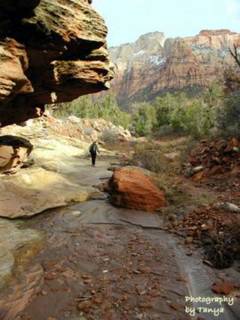
Scoggins Wash shares the trailhead and the first part of the hike with the Coalpits Trail. This section of the hike was named coalpits after the basalt rock formation that look similar to coal. The elevation at the trailhead is the lowest elevation in Zion National Park at 3666'. Huber Wash, Scoggins and Coalpits Wash are all drainage's of the Virgin River and are found on the south side of Springdale in the hottest section of the park. This part of Zion is not as scenic as the other sections and to top it off there has been a lot of building near the trailhead. The first part of the trail passes under powerlines. With this said these southwestern trail are still a delight since they can give the option to hike in Zion in the dead of winter when the other trails might be covered with ice or its too cold. The only winter drawbacks is that it uncomfortable to hike Scoggins if the ground is too wet. Much of the hiking is along a dirt path with some scream crossing and bouldering. The bouldering is pretty simple and its at the far end of the hike before the trail meets with the Chinle Trail. To find the trailhead drive 7.3 miles past the south toll gate. You should see the Coalpits Wash sign and a small dirt turnoff. Park there and located the hikers gate.

The first part of the hike is pretty uneventful, but before long you get to hike along the water and cross it once in a while. Look for the Scoggins and Coalits Wash junction which is near the 2nd basalt formation. You can choose either direction at this point. Today we choose Scoggins. This was a great choice since the wash had some water flowing and it was a delightful day. Near the end where the big boulders croweded and the Zion Park monoliths came close into the view the hike was quite nice. After the boulders the Chinle trail juction will occur. The last part of the Scoggins hike is fun with some bouldering so if you are going to return on the Chinle Trail you might want to go and do the last mile or so of Scoggins first.


To continue down Scoggins Wash follow the wash to where is joins a tributary. Follow Scoggins headed northeast. Scoggins Wash is a tributary of Coalpits that drains below the Altar of Sacrifice. Keep headed towards this monolith.

The Altar of Sacrafice is a unique monlith with 2 red blood like streaks running down from the top. Out of the Chinle and Coalpits hikes this one is my favorite, but it would not be as pleasurable if there were not water flowing in it.

Thank you Bo for another wonderful hike!

Sunday, January 02, 2005


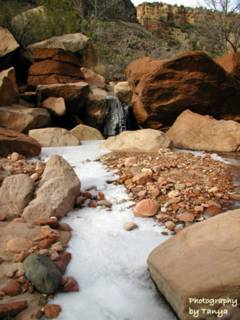
Coalpits wash is a fun winter time hike. The water is mostly frozen, but the air was nice and warm.

Thursday, December 30, 2004

Coalpits Wash hike in Zion National Park

Finding unique Zion National Park trails that can be done in the dead of winter is not always easy, but it is possible. Today my friend Bo and I headed to the southern most corner of Zion Park to hike the Coalpits Wash trail. Coalpits is well known as the lowest elevation in the park at 3666'/1117m. The round trip is 14 miles so if you are going to do it in the winter you need to start early and hussle.

To find the trailhead drive 7.3 miles past the south gate at the park. You will go through Springdale and Rockville to an area that most do not even know is part of Zion Park. You will see a wash with a small green sign, Coalpits, indicating the name of the wash under the bridge. Pull off and park in the dirt area and look to the north for the hikers gate. There is a map at the trailhead, but not much more information. They do allow pack animals on this trail, but the park reserves the right to disallow it different times of the year depending on trail conditions and weather.

The first part of the trail is not very intersting as you pass by powerlines, sagebrush and the trail is far enough from the water at this point that you will not see that. Before too long you will see volcanic, or Basalt rock on the left. To the right the trail, still far from the water, will pass near some low rock formations. In front of you is Cougar Mountain and until you start to walk along the streambed that is the extent of the scenery. This is not a very scenic hike compared to the rest that Zion offers, and the hike is not very challenging because of the lack of elevation, but for a winter hike it is nice. If you do it in the summer watch for rattlesnakes. The cougar tracks made me erie and to top it off as we passed the big 90 degree bend we past an area that would make a great cougar den and it smelled strong of cat oder.

The narrow dirt trail will go along one side of the stream or the other. Going across the stream is required, but unless you fall your shoes should stay dry. There are plenty of stepping stones to use to cross the stream. The Coalpits Wash trail will be joined twice. Once by the Chinle Trail and once by the Scoggins Trail. These areas are not obvious however.

About an mile or so from the end of the trail are some historic oil ruins. These are considered historic artifacts and should not be touched. They are left over from the early 1900s before this area was made part of the park. Continue another mile to mile and a half past the oil remains where the trail will end. The only way any further is by technical climbing. At the end of the trail there are some nice falls between two unamed tributaries and a nice four foot waterfall at the very end.


Zion National Park

Complete Trail Description and Photo Album

Coalpits Hike

Zion National Park hiking guide

Zion National Park Hiking
Tuesday, December 14, 2004

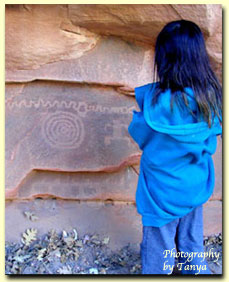
Petroglyph Canyon in Zion National Park is a nice little Rock Art site. Posted by Hello

Zion National Park Petroglyphs (Rock Art)

This week we explored three different Rock Art sites in Zion National Park. The first stop was Sacrifice Rock. This large flat stone is located near the south entrance to the park, across the road from the campground. Look up at the rocks on the side and you should notice a small NPS sign. This site has been horribly vandalized and has lead the NPS to ask those of us who know where Rock Art is to keep it quiet, but this site has been "sacrificed" to the general public and is open to viewing.

The next site in Zion National Park we went to visit was in Petroglyph Canyon. The park does allow visitation to this site, but only after talking with a ranger at the Zion Canyon Visitors Center. This is a fun little spot that is only a short walk off the main highway in Zion. The petroglyphs are on the bottom of a large cliff. If you do get directions, take the time to explore the upper canyon. It ends in a rock slide, but there is some great scenery and boulder hopping along the way.

The final site we went to visit is in Spry Canyon. This involves a stressful uphill hike into Zion's backcountry. The petroglyphs here are faded from exposure, but graffiti free!

Zion National Park

Complete Trail Description and Photo Album

Zion National Park History

Zion National Park hiking guide

Zion National Park Hiking